Posted: December 11, 2025

Photo: Screenshot from the IEA SHC Webinar.
PV hot water systems are growing fast in several regions. Growth is strongest in countries with high PV market penetration or less mature electricity systems. Falling PV hardware prices and smarter control technologies are driving this trend. In a recent IEA SHC Solar Academy webinar, UK-based consultant Tony Day explained the different applications for PV hot water systems. He also highlighted their value for electricity grid balancing. Day presented examples from the United Kingdom, Australia and South Africa. The webinar recording and presentations are available online. https://www.ises.org/what-we-do/events/webinar/iea-shc-solar-academy-solar-hot-water-2030-iea-shc-task-review-2
Day opened his talk with a striking statement: “As a mechanical engineer, I had been convinced that it is a no-go to use low entropy energy for high entropy end-uses like hot water.” He is an independent consultant specializing in leading-edge energy systems research and policy development. Before this, he spent more than 20 years working on energy-efficient buildings and low-carbon technologies at London South Bank University.
What changed his perspective was the sharp decline in PV hardware costs over the last decade. He also noted the introduction of intelligent control systems that help users optimize PV generation for multiple purposes. These developments convinced him to explore the market potential of PV hot water in more detail. Day now sees clear value in thermal storage for managing electricity loads - especially in countries with high PV generation. He also noted that time-of-use electricity tariffs can make heating water with PV electricity a cost-effective choice with low operating costs.
Day co-edited the Technology Brief “The Emergence of PV Hot Water Systems”, which summarizes the PV hot water applications and outlines future technology trends. You can download the Technology Brief here. https://task69.iea-shc.org/Data/Sites/1/publications/IEA-SHC-Task69-C.3_23-PV-Hot-Water-Technology-Brief.pdf.
Day distinguishes three main applications and links each to a specific country.
- PV2Heat: This is the most basic option. PV power from a rooftop system is fed directly into a hot water tank via an electric heater. South Africa is one of the leading markets. High grid-connection costs and unreliable power supply push many homeowners toward autonomous solutions. By 2023, almost 10,000 PV2Heat systems were in operation in the country.
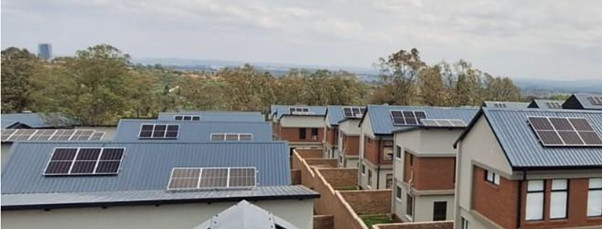
PV2Heat installations in South Africa
Photo: Lavhe Maluleke, Stellenbosch University
- PV self-consumption for hot water: In this setup, rooftop PV powers household appliances or feeds electricity into the grid. At times of high solar output and low local demand, exporting power may bring low returns. When grid prices drop, it can make more sense to divert electricity into hot water instead.
The UK is a strong example. Rooftop solar is growing quickly. Several companies now offer smart hot water tanks to meet this demand (see following photo).
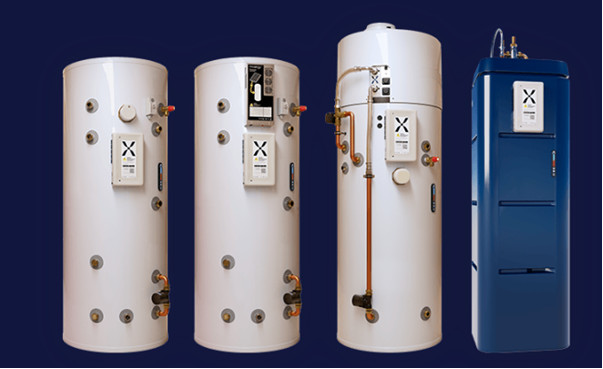
Smart hot water tanks from the UK company Mixergy use machine learning to optimize heating schedules based on usage patterns, energy tariffs and renewable generation forecasts. The goal is to maximize energy savings.
Photo: Mixergy
- Hot water from grid PV: In countries with rapid growth in grid-connected PV, utility companies can centrally control residential water heaters. Together, these tanks act as a large thermal battery. They absorb excess electricity from the grid. Australia is a good example. It has high levels of rooftop and utility-scale PV. Electricity prices can even go negative when solar supply is very high. At such times, thermal storage can operate as a distributed battery under central control.
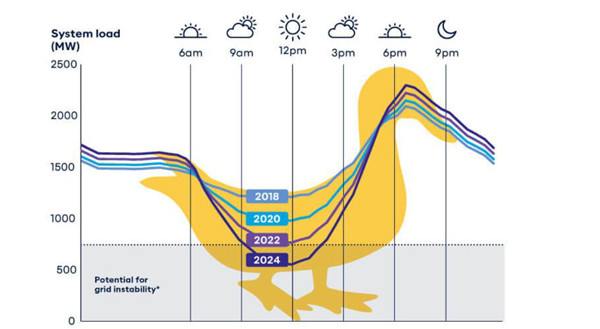
A graphical representation of the “Duck Curve” in Western Australia, illustrating the pattern of daily electricity demand.
Scheme: Synergy
Day expects a positive future for PV hot water technologies. But he also sees barriers: Skills and knowledge among installers are often lacking. Regulations and policy understanding are also limited. “There is resistance in countries such as the UK against using electricity for hot water production because gas is so much cheaper than electricity”, he added. Yet many gas water heaters can be retrofitted with an electric heating element that can be powered by solar electricity.
In the Q&A session, Day stressed that the choice is not just driven by cost alone. Roof space is also a key factor. PV modules offer flexible uses, but they require around three times more roof area than solar thermal collectors for the same energy yield. The right decision depends on the local market and the specific application, Day concluded.
Websites of organizations mentioned in this news article: